Hitachi
Contact UsContact Us

2026

♯05

Academy Letters

A Dialogue Between Sony and Hitachi:
What is the Value in Corporate Universities?

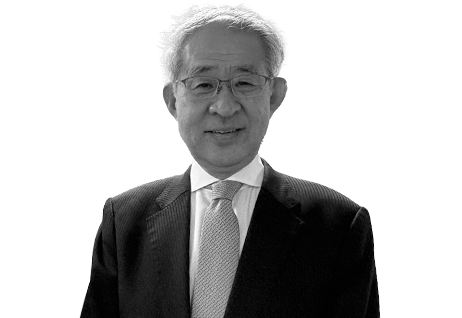
Kazushi Ambe
Advisor, Sony Group;
President of Sony University

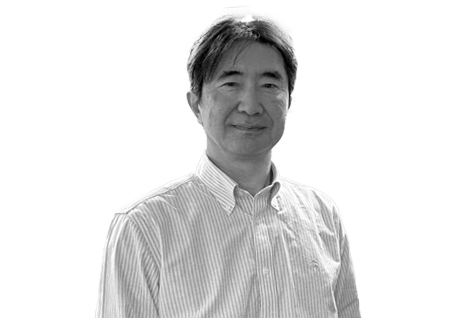
Hajime Kawamura
President, Hitachi Academy

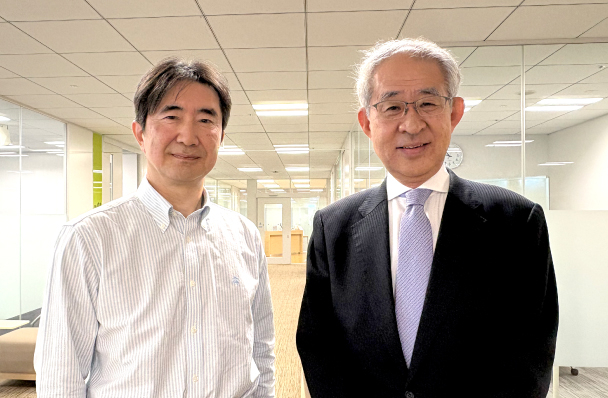
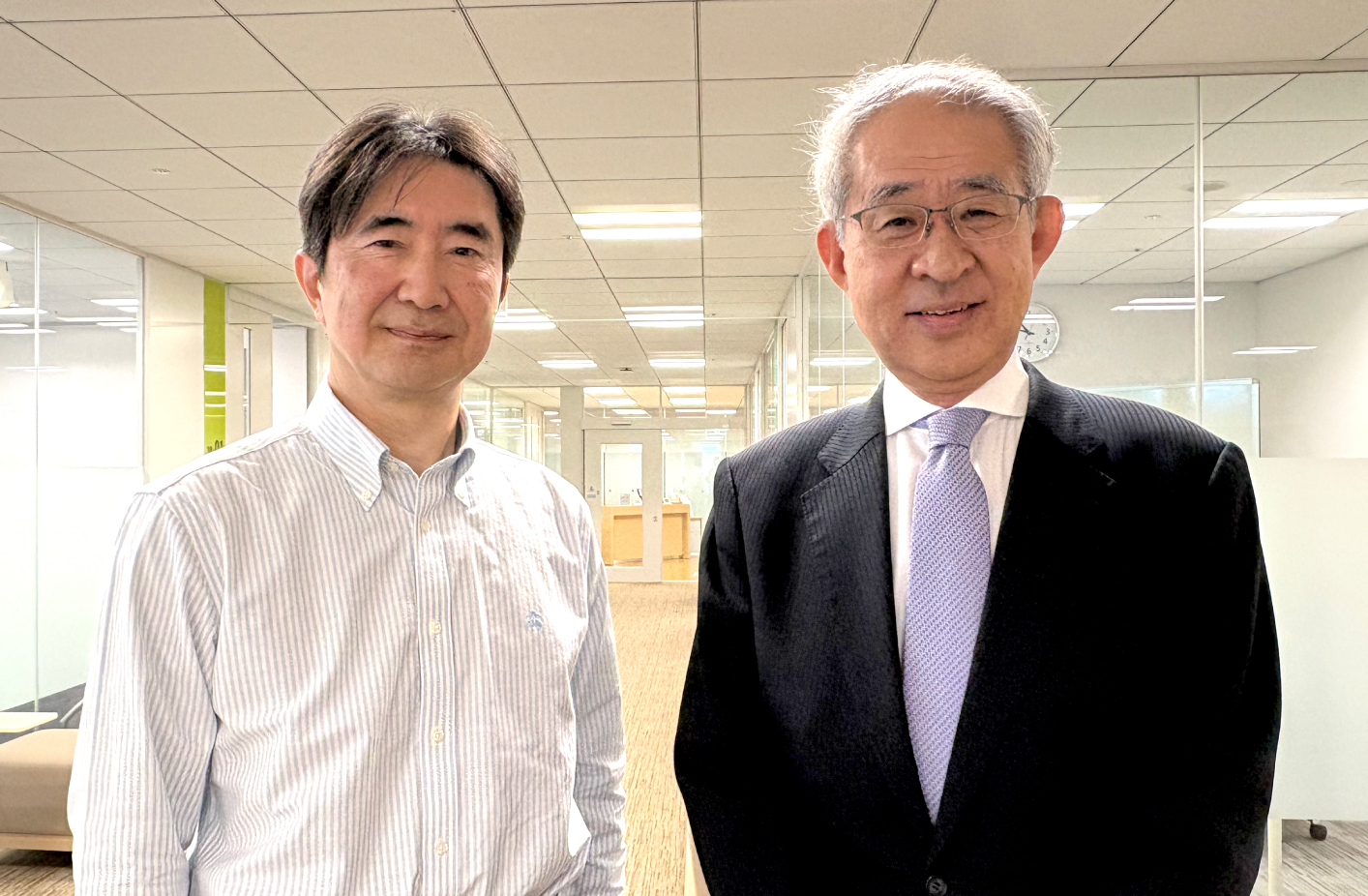
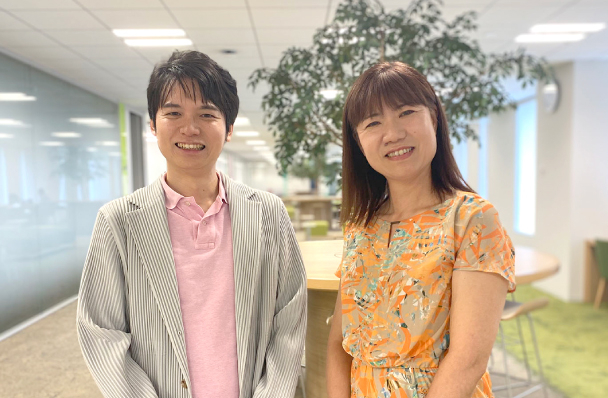
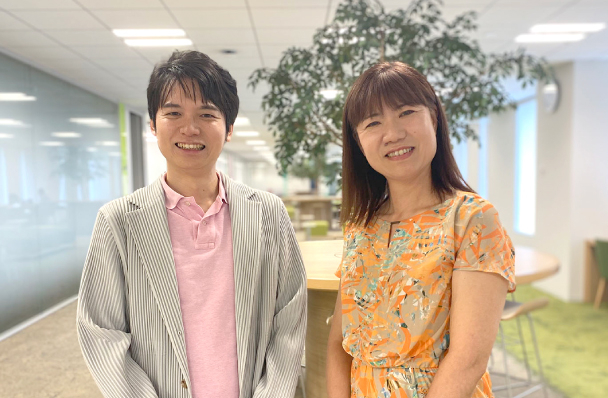
As globalization accelerates and AI continues to evolve at a rapid pace, the business environment is undergoing dramatic change. Developing the next generation of leaders has therefore become one of the most critical drivers of sustainable growth. This article features a dialogue between Kazushi Ambe, President of Sony University, and Hajime Kawamura, President of Hitachi Academy. Hitachi systematically defines an image for leaders and constructs models, while Sony emphasizes the importance of individuality. How do these two companies, with their differing approaches, view the true role of a corporate university? Here we offer a dialogue exploring the learning needed to thrive in a time of transformation.

The Role of Corporate Universities in Globalizing Organizations

Kawamura First, let's discuss the challenges of developing human capital in a globalizing business environment. In Hitachi's case, although we operate our business on a global scale, employee development is handled by local subsidiaries in each country. To date, training at Hitachi Academy has primarily been offered to those in Japan, with global expansion limited to select training programs for management. As a global corporate university, Sony University reaches employees around the world, and Hitachi would like to build a similar system in the future.
AmbeAt a time when both society and business are in constant change, developing leaders who can influence their organizations and bring people together around a clear direction has become more important than ever. For Sony in particular, given our transformation from electronics to content, Sony University plays a significant role as a platform for bringing the entire organization together. We currently offer global programs at three levels― junior, mid-level, and senior― with participant numbers intentionally kept limited. This is because we hope that those selected will demonstrate impact in their workplaces and act as "catalysts" who help spread the value of learning and leadership development across the company.
KawamuraRather than limiting participant numbers, at Hitachi we have introduced "LinkedIn Learning," and are creating an environment that allows anyone, anywhere in the world, to learn. How do you provide post-training follow-up at Sony?
AmbeBuilding on those who have participated in the program, we are creating a virtual alumni network. In addition to horizontal connections among program peers, the network emphasizes vertical connections across different graduating classes. We have also established a voluntary system where three or four alumni serve as mentors to the next cohorts, leveraging their own experiences to support the next generation.
KawamuraThe mentor system is certainly a wonderful one, and we would like to take its lessons on board. At Hitachi right now, we are faced with the issue of how to drive alignment around a common message throughout our organization. Specifically, we aim to communicate three points as core pillars of our global corporate university--(1) Fostering of the culture and leadership of "One Hitachi," (2) Contribution to the business strategy centered around Lumada (our digital solution platform) based on the new "Inspire 2027" management plan, and (3) Clarification of the role that people should play amid the evolution of AI.
AmbeSony is moving in the same direction, and we see the preservation of our corporate culture and evolution in line with the times as two of the university's most important missions. Guided by our shared purpose - "to fill the world with emotion through the power of creativity and technology"- we view the university as an effective way to embed this purpose across the company by helping each business understand how it contributes to it.

Moreover, for Sony to continue taking the initiative amid technological change, we must look beyond surface-level shifts and focus on their underlying essence. One such area is AI. We have established a dedicated division to drive its advancement and encourage employees to actively use this technology. At the university, however, we expect leaders to think more deeply about and understand the higher-level concepts behind it. AI is ultimately a tool; what matters is how leaders create value through it. We want our leaders to reaffirm the importance of authentic leadership ― self-reflection, critical thinking, and asking the right questions. The more advanced technologies like AI become, the more important the roles and qualities of humans as leaders become.

A Dialogue Between Sony and Hitachi: What is the Value in Corporate Universities?

The Culture and Value That Only a Corporate University Can Foster

KawamuraUniversal skills and a broad-based education are not gained solely by acquiring knowledge; they are nurtured through dialogue and discussion with others. The question is how we can scale this "development" on a global level.
AmbeAlthough we work with external partners such as business schools for broad-based knowledge, the value of Sony's own program lies in helping leaders understand the essence of our philosophy and corporate culture through Sony's history and the examples set by past leaders, and in developing the human capabilities to put that understanding into action. What is crucial here is diversity; when members with different business backgrounds engage in discussion, a kind of chemical reaction occurs that leads to much deeper insights.
KawamuraThat's interesting. By the way, the idea of long-term talent development is well-established in Japan, but it is not as common overseas, which can make it difficult when choosing younger employees to participate in our training. What is your approach to selecting participants?
AmbeFor the junior employees, we intentionally provide open application opportunities, as those who choose to apply on their own initiative tend to show particularly strong learning outcomes. For middle and senior employees, on the other hand, since the company entrusts them with significant responsibilities, we believe each organization should take primary responsibility for selecting the right candidates. I was greatly impressed to hear that Hitachi had clearly defined its ideal leader profile; as having well-defined criteria makes the selection much easier and offers a valuable reference for us. At Sony, senior management has a strong understanding of the value of our university, and takes the selection process very seriously. They often remember the names of participants from their own divisions, which is a huge motivating factor for us on the university management side.

Being selected for training also sends participants the message that the company has high expectations for them. In particular, it inspires those employees who participate in higher-level courses every few years to feel more strongly that the company is investing in them, increasing engagement.
Kawamura I agree, commitment from management is essential. However, we also face the challenge that the Japan side does not yet have full visibility of the outstanding talent overseas. That is why we are working to strengthen "One Hitachi" at both the corporate and regional levels in areas such as North America, Europe, and India. Our goal is to create a common forum where diverse talents selected from around the world can come together for discussions that transcend borders and organizations. While sharing common values, we plan to build a space where people with different backgrounds can challenge and learn from one another, combining global alignment with region driven development.
Ambe In Sony's case, ownership is stronger at each business unit (BU) level than by region. We therefore hold regular discussions with each BU's CHROs to align on selection criteria and our vision for future talent. Our goal is to strategically link BU-specific programs with group-wide initiatives.
KawamuraHow do you separate the content of shared group-wide programs with initiatives specific to each BU?
AmbeWith a 25-year history, our university is well understood by BU in terms of what people can learn from us, which has naturally led to a clear division of roles between the university's programs and BU-specific programs. Some BUs also rotate the programs they send the same individual to from year to year.
A Dialogue Between Sony and Hitachi: What is the Value in Corporate Universities?

New Visions for Leadership: Hitachi Driving Growth with "One Hitachi," Sony Turning Individuality into Strength

KawamuraStarting in fiscal 2026, Hitachi will launch a new leadership development program that defines ten competencies. More than just a training course, this is a comprehensive, two-year program that combines action learning and coaching. Under this plan, we intend to develop around 1,000 people over a three-year period who will lead the next generation, equipping participants with all the skills necessary to be a good leader in the workplace, including coaching skills.
AmbeI have always admired Hitachi's comprehensive and systematic approach to addressing issues, which is truly emblematic of your company. Although Sony operates primarily in the ever-changing B2C businesses and therefore embraces continual change, we have much to learn from Hitachi's approach of deeply defining its core leadership profile. What we seek is "authentic leadership" that brings together both perspectives― without overly fixing the image of a leader- and encourages individuals to reflect on who they truly are. Through 360-degree evaluations and self-reflection, we hope our leaders will express their own individuality while staying grounded in our Purpose.

There can be as many ways of realizing the "emotion" described in our Purpose as there are leaders in the company. Currently, Japanese participants make up about 20 percent of attendees at Sony University, and the quality of their insights is highly regarded by colleagues from other countries. Some leaders speak eloquently of their vision, while others are more introverted, thinking deeply and delivering profound, authentic messages. To truly embrace diversity, individuals must establish a strong sense of self, and I believe that each person's unique way of expressing that self is what creates value.
KawamuraOur mission is to create an environment for employees to engage in face-to-face dialogue that promotes mutual respect and understanding that transcends national and regional boundaries.
Ambe I agree. Because our programs are comprised entirely of people from within the company, we can share common values and engage in open, honest discussions. I believe this is where the true value of a corporate university lies.
KawamuraTo bridge physical distance on a global scale, we can leverage virtual tools to strengthen our organization by maintaining the ties between members who have learned together, just like the alumni you mentioned, and treating these relationships as company assets.
AmbeI feel that Hitachi and Sony share a common underlying sense of the challenges we face. I would very much welcome continuing to exchange ideas and insights going forward.